Buying Skechers online or on the resale market exposes you to a very real risk of counterfeiting. Copies often mimic the general shape and colors of popular models, but several physical elements give them away as soon as you know where to look. This article reviews the verifiable criteria, point by point, to distinguish an authentic pair from an imitation.
Authentic Skechers vs. Counterfeits: A Table of Visible Differences
Before detailing each criterion, a synthetic comparison allows you to visualize the most common differences between a genuine pair and a copy.
| Criterion | Authentic Pair | Common Counterfeit |
|---|---|---|
| Logo on the tongue | Clear lettering, regular relief, well-centered stylized “S” | Blurry lettering, irregular spacing, shifted or flattened logo |
| Inner label | Readable SKU code, uniform font, size consistent with the box | Absent or inconsistent SKU, variable font, typographical errors |
| Sole | Dense and soft foam (Memory Foam on applicable models), clear engraving | Rigid or overly soft foam, shallow engraving |
| Box and packaging | Thick cardboard, Skechers blue color, barcode matching the internal SKU | Thin cardboard, off-color, generic or absent barcode |
| Stitching | Regular threads, no visible excess glue | Loose threads, overflowing glue marks, asymmetries between left and right foot |
This table covers the most common discrepancies. Each criterion deserves a more in-depth examination to understand what makes it reliable.
To make a good choice even before checking authenticity, it is useful to know the size of Skechers by model, as a size discrepancy between the label and the feel on the foot can also indicate a copy.
SKU Code and Inner Label: The First Verification Reflex
The SKU code printed on the inner label is the quickest indicator to check. This alphanumeric code identifies the model, color, and size. On an authentic pair, it matches exactly with the one printed on the box and the barcode attached to the packaging.
On a counterfeit, three common scenarios arise:
- The SKU is absent from the inner label, whereas Skechers has systematically printed it on its models for years.
- The SKU is present but does not match the one on the box, indicating recovered or separately manufactured packaging.
- The SKU exists and seems consistent, but a search on the official Skechers website returns no results for that reference.
Cross-referencing the exact reference with the official catalog or the brand’s social media remains the most reliable method. Counterfeit sellers do not always master the precise details of the referenced collections and models.
Material Quality and Finishes: What Copies Fail to Replicate
The feel of the materials almost always gives away a counterfeit. On Skechers models equipped with Memory Foam, the insole slowly returns to its shape after pressure. A copy uses generic foam that either stays compressed or bounces back immediately, lacking this characteristic gradual response.
The stitching offers another reliable clue. An authentic pair features taut, regular threads, with tight stitches at junction areas (tongue, heel counter, toe). On an imitation, threads often protrude at the ends. Visible glue marks between the sole and the upper serve as an additional warning signal.
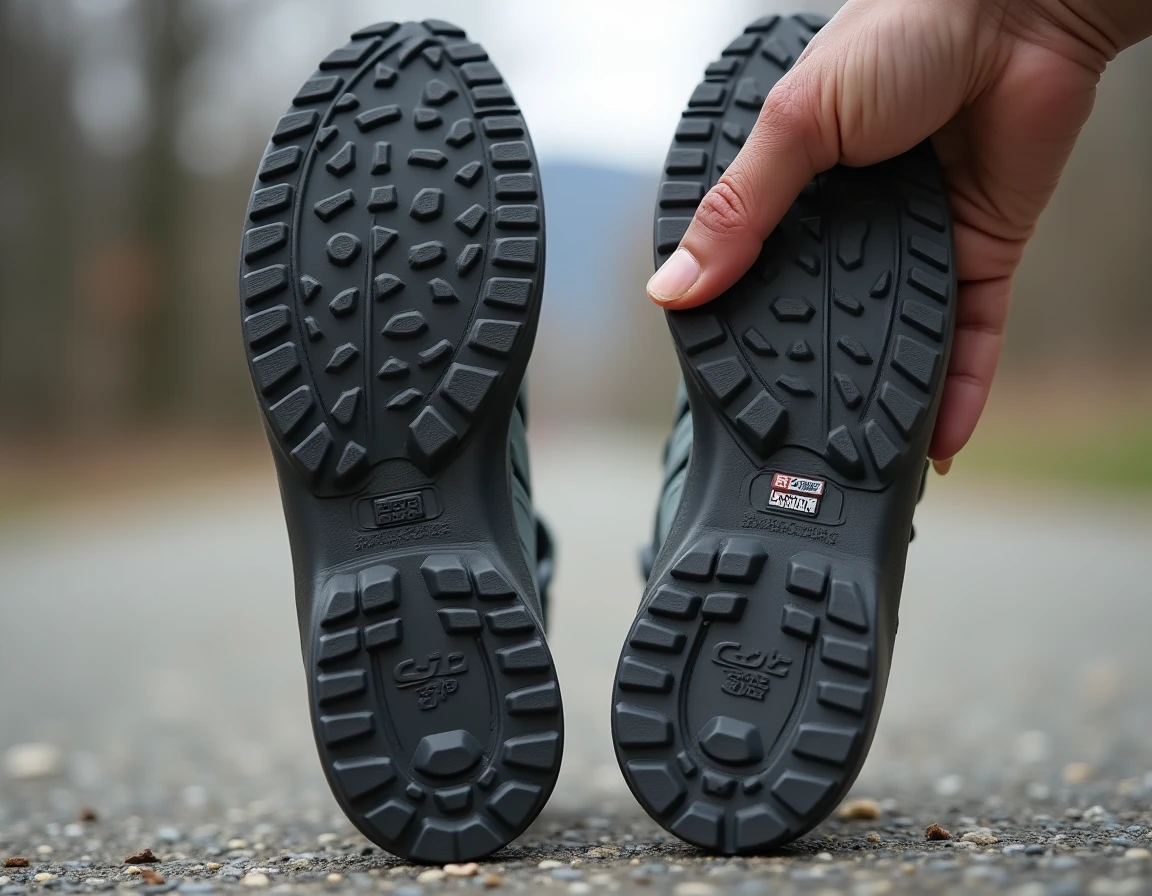
The Skechers logo engraved on the outsole also deserves inspection. On the original, the engraving is clear and deep. Copies produce a superficial engraving, sometimes slightly misaligned from the center of the sole.
Asymmetries Between Left and Right Foot
A frequently overlooked check is to compare the two shoes side by side. Counterfeits often show differences between the two feet: slightly uneven shaft height, shifted logo position on one side, or variable foam density. Skechers production lines maintain strict symmetry, making any visible difference suspect.
Resale Platforms and Secure Purchase of Skechers
The purchasing channel directly influences the risk. Platforms like Vinted or Facebook resale groups represent the circuits where counterfeits circulate most easily, as no systematic checks are performed before sale.
In contrast, some marketplaces have strengthened their authentication programs with experts dedicated to sneakers. eBay France systematically checks certain models before shipping (label, barcode, packaging consistency, typical copy defects), which reduces the risk for purchases through these certified channels.
Clearance operations organized by official distributors (private sales, factory stock clearance) remain reliable channels despite sometimes very low prices. These sales generally come with mentions of specific models or collections, information that counterfeit sellers do not provide accurately.
Verification Points Before a Purchase on the Secondary Market
- Request a photo of the inner label with the readable SKU code and verify its match on the official Skechers website.
- Compare the proposed price with the catalog price: a discrepancy of more than half on a recent model should raise alarms.
- Prefer sellers who accept returns and refunds, which deters resellers of copies.
- Use the authentication services offered by certain platforms rather than relying on a simple exchange of photos.
The counterfeiting of Skechers focuses on the best-selling models, those with easily recognizable silhouettes. Niche models or limited collaborations are less copied, making them paradoxically safer purchases on the secondary market. The most effective reflex remains cross-referencing the SKU code with the official catalog: if the reference does not exist, neither does the pair.