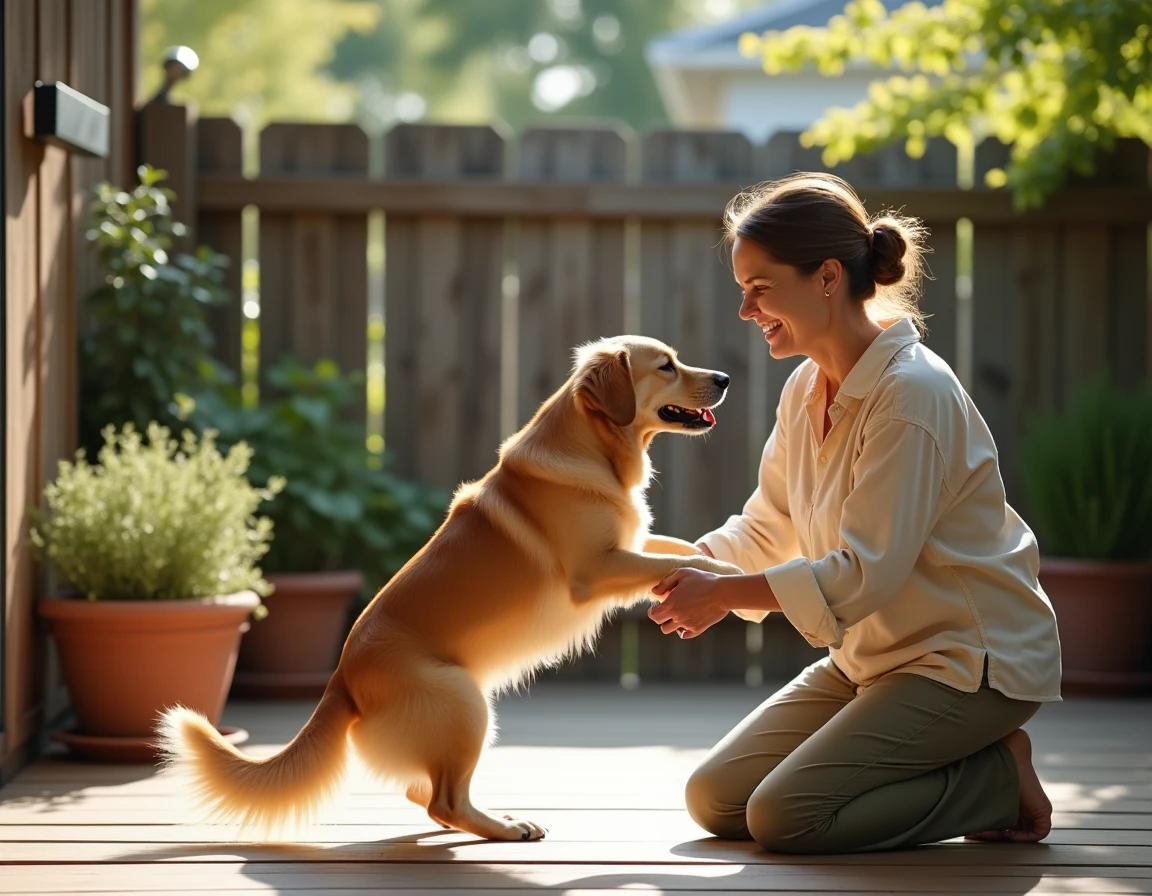
The memory of dogs intrigues both owners and researchers in animal cognition. When a dog reunites with its former owner after months of separation and shows intense joy, the question arises: does it really remember this person, or is it reacting to an immediate sensory stimulus? Scientific work in recent years has begun to untangle what pertains to lasting memory, conditioned association, and olfactory recognition.
Dog’s Olfactory Memory: The Most Lasting Channel of Memory
Before discussing duration, it is essential to understand the mechanism by which a dog remembers. Vision plays a secondary role. It is the sense of smell that serves as the primary vector of recognition in dogs.
Research in sensory neuroscience compiled by Esprit Dog confirms that a dog can recognize a scent associated with a person or place more than ten years after exposure. This considerable timeframe, relative to the animal’s lifespan, means that a dog separated from its owner for several years can still recognize them if olfactory conditions allow.
As detailed in the dog’s memory according to Animal Passion, this olfactory retention ability far exceeds what canine visual memory can offer. A dog does not store a “portrait” of its owner. It stores a chemical signature associated with emotions experienced during past interactions.
This point has a direct practical consequence: a dog placed in a foster home and then returned to its former owner does not recognize a face. It recognizes a scent, and this scent triggers an emotional cascade that produces behaviors interpreted as joy or attachment.
Dog’s Episodic Memory: What Recent Studies Reveal
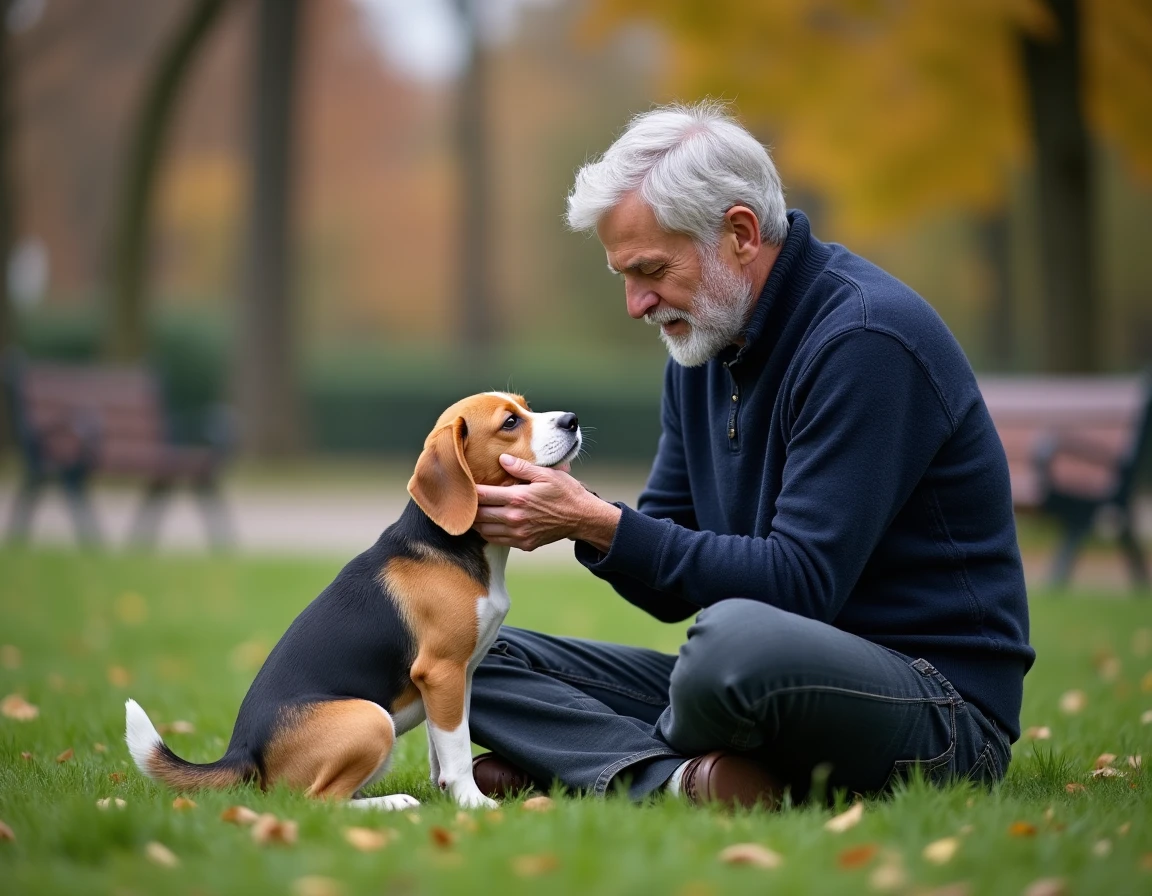
For a long time, the scientific community believed that only humans and a few great apes possessed episodic memory, meaning the ability to remember a specific event situated in time and space. Dogs, it was thought, functioned solely through associations.
Hungarian researchers challenged this view. Their study, published in the journal Current Biology, demonstrated that dogs possess a form of episodic memory, referred to as “episodic-like memory”. The protocol relied on the “Do as I do” method: a dog observed a human performing an action, then had to reproduce it after a delay, without being informed that it would be asked to do so.
The results showed that dogs encoded events even when they had no utilitarian reason to retain them.
A Further Step in 2024
A study from the University of Auckland published in Behavioural Processes in 2024 took the analysis further. The tested dogs correctly reproduced actions observed in a human one hour after seeing them, bringing their memory capacity closer to that of young human children.
The available data do not yet allow for conclusions about the maximum duration of episodic memory retention in dogs. One hour is the experimentally tested delay, not necessarily the limit. Field reports from behaviorists suggest much longer durations for emotionally charged events, but these observations still lack a rigorous experimental framework.
The Role of Emotion and Sleep in Memory Consolidation
Not all memories are created equal. The emotional intensity at the time of the event determines the longevity of the memory in dogs, just as it does in humans.
A dog that has experienced intense fear (abuse, accident, sudden separation) retains a lasting memory trace of that episode. This mechanism explains panic reactions to seemingly innocuous stimuli: the sound of crumpling paper, a type of voice, a body posture. The dog’s brain has associated the stimulus with a powerful negative emotion, and this association withstands the test of time.
Conversely, moments of very strong joy (reunions, intense play, unusual food rewards) also leave lasting imprints. This is why a dog may show disproportionate enthusiasm when reuniting with a person it hasn’t seen for years.
Sleep as a Memory Catalyst
Research based on EEG recordings conducted in Hungary has shown that deep sleep after learning enhances memory consolidation in dogs. An order learned followed by a nap is better retained than the same order without a rest period. This mechanism, well-documented in humans, works similarly in dogs.
This finding has implications for dog training: short learning sessions followed by rest are more effective than prolonged sessions without breaks.
Dog’s Short-Term Memory: A Narrow Window
While a dog’s long-term memory impresses with its duration (especially through the olfactory channel), its short-term memory remains very limited. Research converges on a retention window of a few minutes for information not associated with an emotion or reward.
In practical terms, this means that a dog that misbehaves does not connect it to a reprimand given several minutes after the fact. Delayed punishment, still practiced by some owners, has no educational effectiveness. The dog does not understand why it is being scolded.
This distinction between short-term memory and long-term memory sheds light on an apparent paradox:
- A dog forgets within minutes where it has placed its toy but recognizes the scent of its former owner years later
- A dog does not retain an isolated verbal prohibition but retains the trace of a sound trauma that occurred only once
- A dog seems to “forget” a command learned the day before, while it perfectly remembers the way to the park it hasn’t visited in months
These behaviors can be explained by the coexistence of distinct memory systems, each with its own rules of retention and erasure.
How Long Does a Dog Remember Its Owner: What We Can Affirm
Current evidence suggests that the memory of an owner can persist throughout the dog’s life, provided that the relationship has been marked by emotionally significant interactions and that recognition occurs through the olfactory channel.
The limits of this assertion deserve to be stated. Experimental studies focus on short delays (up to one hour for episodic memory). Accounts of reunions after several years, although numerous and consistent, are based on observation rather than controlled protocol.
A dog possesses several types of memory that function in parallel. Emotion and smell are the pillars, and the duration of retention far exceeds what was assumed just twenty years ago. Your dog likely never forgets you, but it does not remember you in the same way you remember it.