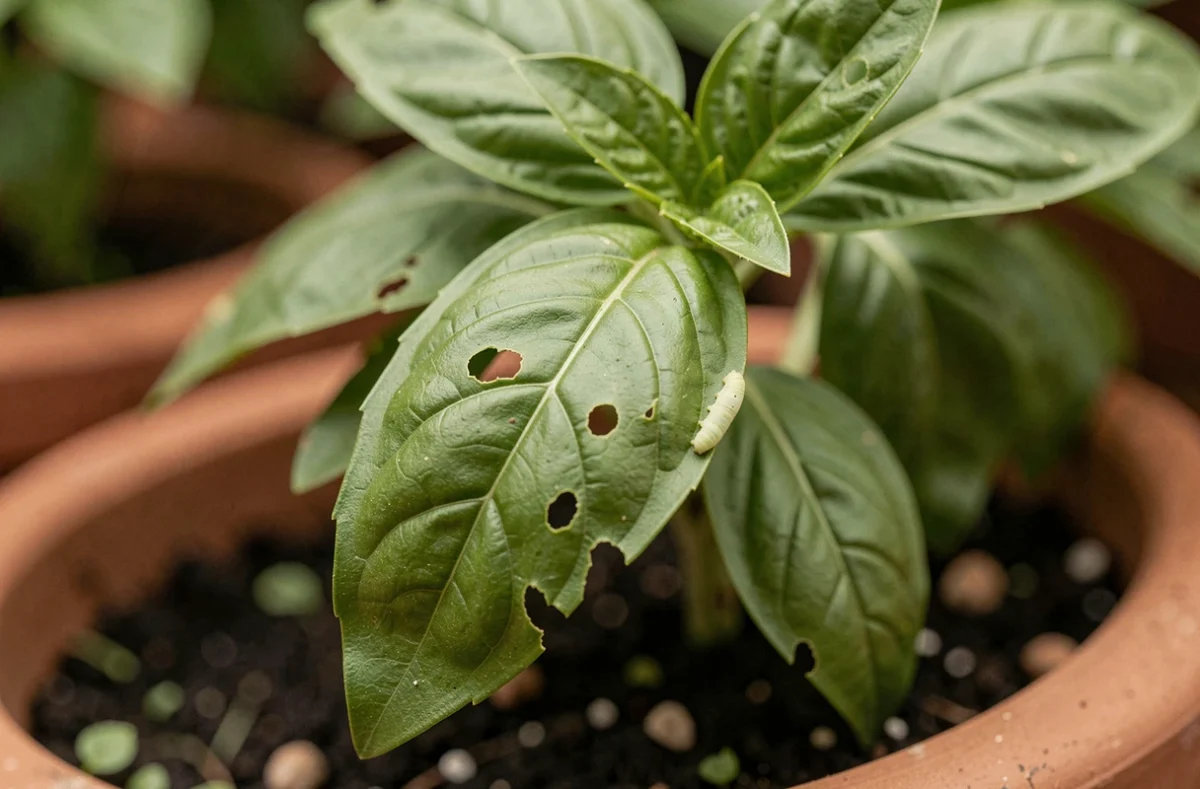
Basil leaves riddled with holes, with edges cut out as if by a cookie cutter: it’s a frustrating sight. Before spraying anything, first make sure the culprit is actually a green caterpillar and not another pest. The distinction matters, because treatments target different organisms.
Green caterpillar or slug on basil: how to tell the difference
Noticed holes in your basil leaves early in the morning? There are almost always two suspects: green caterpillars (butterfly and moth larvae) and slugs.
The clues they leave behind can help you tell them apart. Slugs leave a shiny trail of mucus on the leaves and pot. They feed at night and prefer the lower parts of the plant. Caterpillars, on the other hand, leave no slimy trail. Instead, they produce small, dark droppings that you may spot on top of the leaves or at the base of the stem.
Check the undersides of the leaves and along the veins, not just the holes. Green caterpillars blend in with the foliage. Some species lay their eggs under leaves, while others hide along the central veins. A quick inspection at dusk, when they become active, is more reliable than simply looking at the damage in the morning.
If you find neither mucus nor droppings, the culprit may be a beetle or another garden insect. Holes in the foliage alone don’t justify treatment: first confirm that caterpillars are present to avoid unnecessary spraying and harming beneficial insects in your vegetable garden.
Once you’ve confirmed they’re there, several methods can help you get rid of green caterpillars on basil, starting with gentle solutions suitable for an edible plant.
Hand-picking and black soap: effective methods for basil
Basil is an aromatic herb that’s eaten fresh. Any pest-control method must take this direct food use into account. That’s why gardeners usually start with two simple techniques.
Hand-picking: the safest option
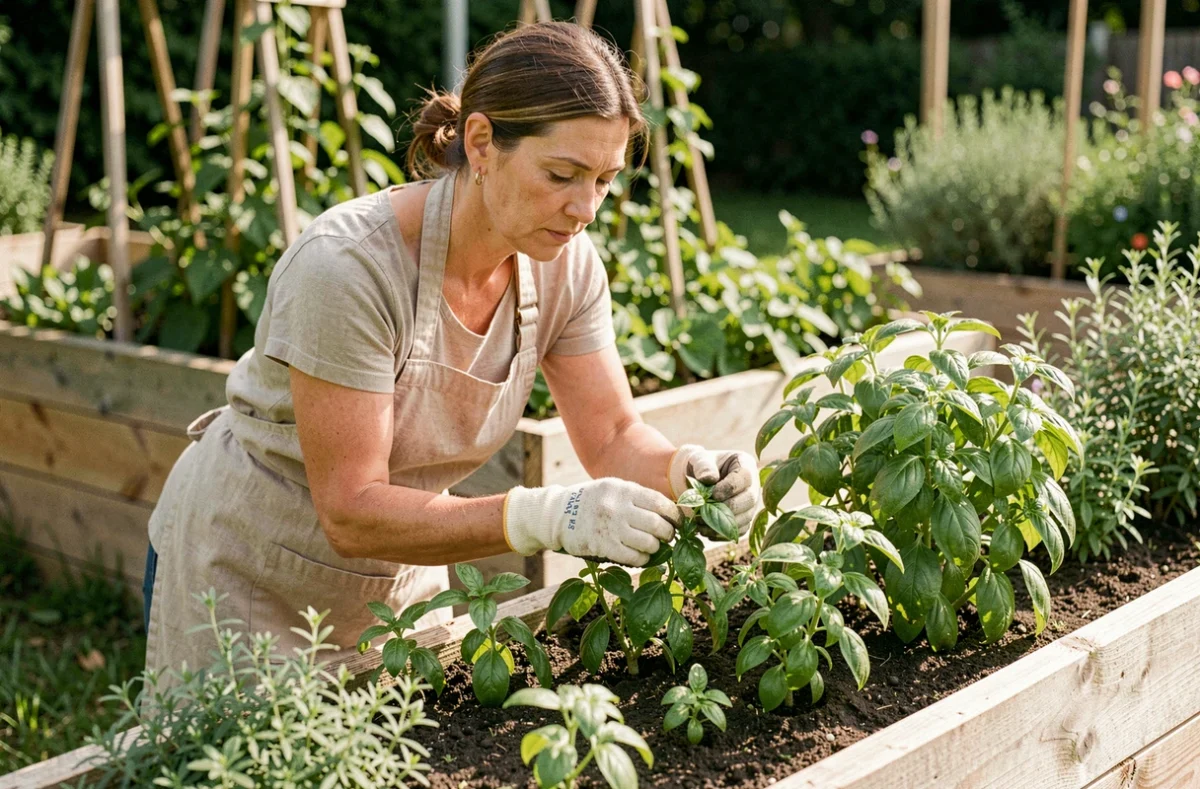
This is the most effective method when you have only a few plants. Put on gloves, turn over each leaf and remove the caterpillars one by one. Move them well away from the vegetable garden or drop them into a bucket of soapy water.
Repeat every two days for one to two weeks. One pass isn’t enough: eggs that have already been laid may hatch in the meantime. Regular checks break the reproductive cycle without using any products.
Spraying with diluted black soap
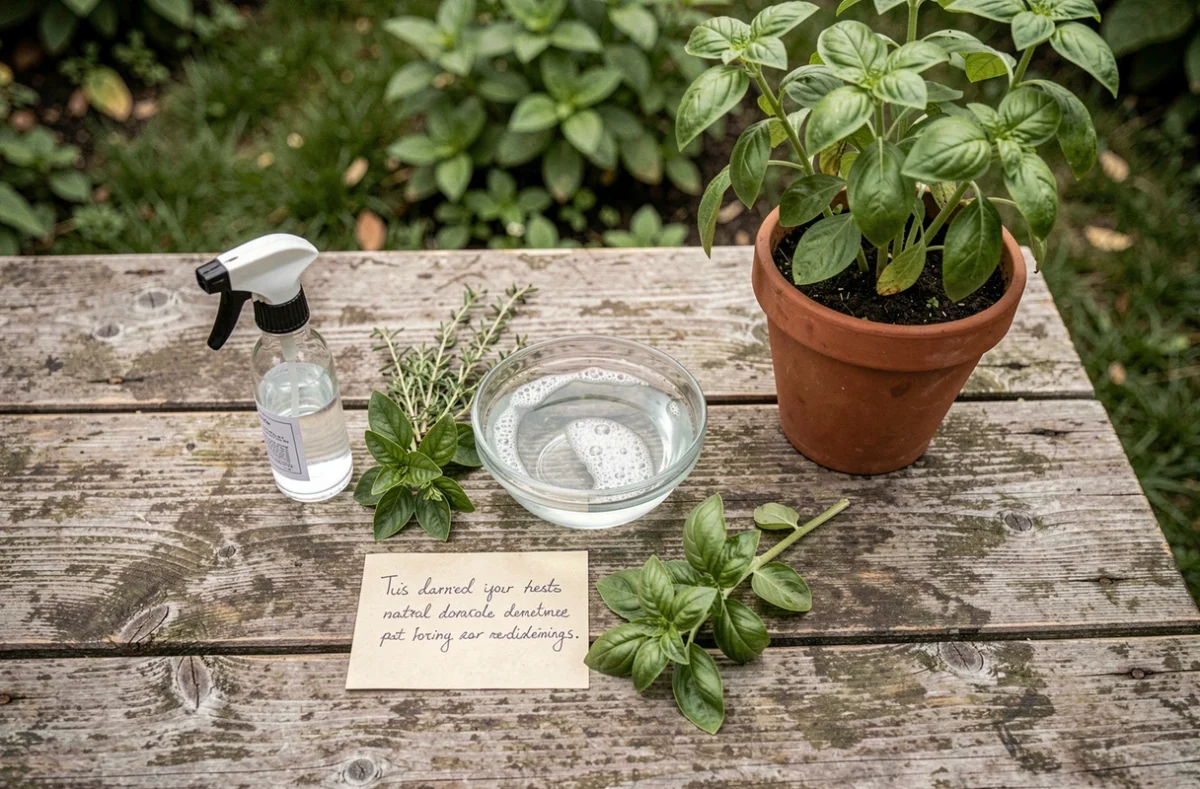
Liquid black soap diluted in warm water forms a film that interferes with small caterpillars’ breathing. Here’s how to use it:
- Dilute one to two tablespoons of black soap in one litre of warm water, without adding any other product
- Spray the tops and undersides of the leaves in the evening, once the sun can no longer scorch the foliage
- Reapply after every rainfall, as water washes away the protective film
Black soap isn’t selective: it also works on aphids, but can affect beneficial insects on the plant. Spray only the infested areas rather than the entire plant.
Bacillus thuringiensis on basil: effective, but check the precautions
Bacillus thuringiensis (Bt) is a naturally occurring bacterium often cited as the go-to biological solution for caterpillars. It acts specifically on lepidopteran larvae (butterflies and moths), destroying their digestive system after they ingest it.
Its effectiveness against caterpillars is well documented, particularly on cabbage crops. Its use on basil is less clear-cut. Whether a plant protection product is authorised depends on the crop it is used on and the use specified on the label. The French Ministry of Agriculture’s official E-phy database lists the authorised uses for each product on the market.
Before buying a Bt product, check that “aromatic plants” or “basil” is listed among the authorised uses on the packaging. A Bt product approved only for cabbage or tomatoes should not be used on another crop, even if it contains the same active ingredient.
If the product is suitable, apply it with these points in mind:
- Spray in the evening, as UV rays quickly break down the bacterium
- Target the undersides of the leaves, where caterpillars feed
- Observe the pre-harvest interval stated on the packaging, even for a “natural” aromatic herb
- Don’t apply in rainy weather, as the bacterium will be washed off before it can work
Protecting basil over time: insect netting and companion planting
Treating caterpillars only solves the problem temporarily if butterflies continue laying eggs on your plants. Prevention relies on two complementary approaches.
Insect netting
Fine-mesh netting keeps butterflies from reaching the foliage to lay their eggs. Place it over the pot or planter, leaving enough room for the plant to breathe. This physical barrier is the most reliable option on a balcony or patio where plants are grouped together.
Companion plants
Some plants give off scents that confuse butterflies searching for basil. Mint, sage and rosemary are often planted near herbs for this reason. The effect isn’t guaranteed in the way an insecticide’s is, but growing several herbs together in the same planter reduces the concentration of scent cues that a basil plant would give off on its own.
One final point that’s often overlooked: overwatering weakens basil and makes it more vulnerable. A vigorous plant grown in well-drained soil and exposed to sunlight can withstand a few caterpillar bites better than one stressed by excess moisture.
Basil nibbled by green caterpillars can almost always be saved, provided you act as soon as the first holes appear. Regularly checking the undersides of the leaves, using a treatment suitable for an edible plant and putting up a physical barrier to prevent egg-laying are enough in the vast majority of cases.