A lawn that fails to establish properly cannot be rescued with fertilizer. Lawn density is determined before sowing, by the soil structure and the choice of varieties. Growing a successful lawn means getting to grips with a few technical factors that most guides gloss over.
C3/C4 ratio and the seasonal trade-offs of grasses
Choosing a grass is about more than reading the label on the seed bag. It involves balancing summer hardiness, winter appearance and watering needs during establishment.
C4 grasses (Bermuda grass, kikuyu) tolerate high temperatures and use less water once established. The trade-off is that they go dormant as soon as temperatures drop and turn noticeably yellow in winter in temperate climates. For a garden in the northern half of the country, this is a deal-breaker aesthetically.
C3 grasses (perennial ryegrass, tall fescue, Kentucky bluegrass) retain their color for longer, but their drought resistance remains limited once mature. Perennial ryegrass establishes quickly and tolerates foot traffic; fescue adapts better to dry soils; Kentucky bluegrass forms a dense carpet through its runners but germinates slowly.
A good rule of thumb: combine at least two C3 species in the mix to offset each other’s weaknesses. We favor a tall fescue and Kentucky bluegrass mix when the soil is well-drained and the lawn is for family use.
Even a variety marketed as drought-resistant needs regular watering during germination and root establishment. Water efficiency only comes into play once the root system is established, several weeks after sowing.
To help choose seed suited to your soil and climate, L’Herbe sous le Pied’s lawn seed offers blends tailored to different uses and levels of sun exposure.
Soil preparation: structure and pH before sowing
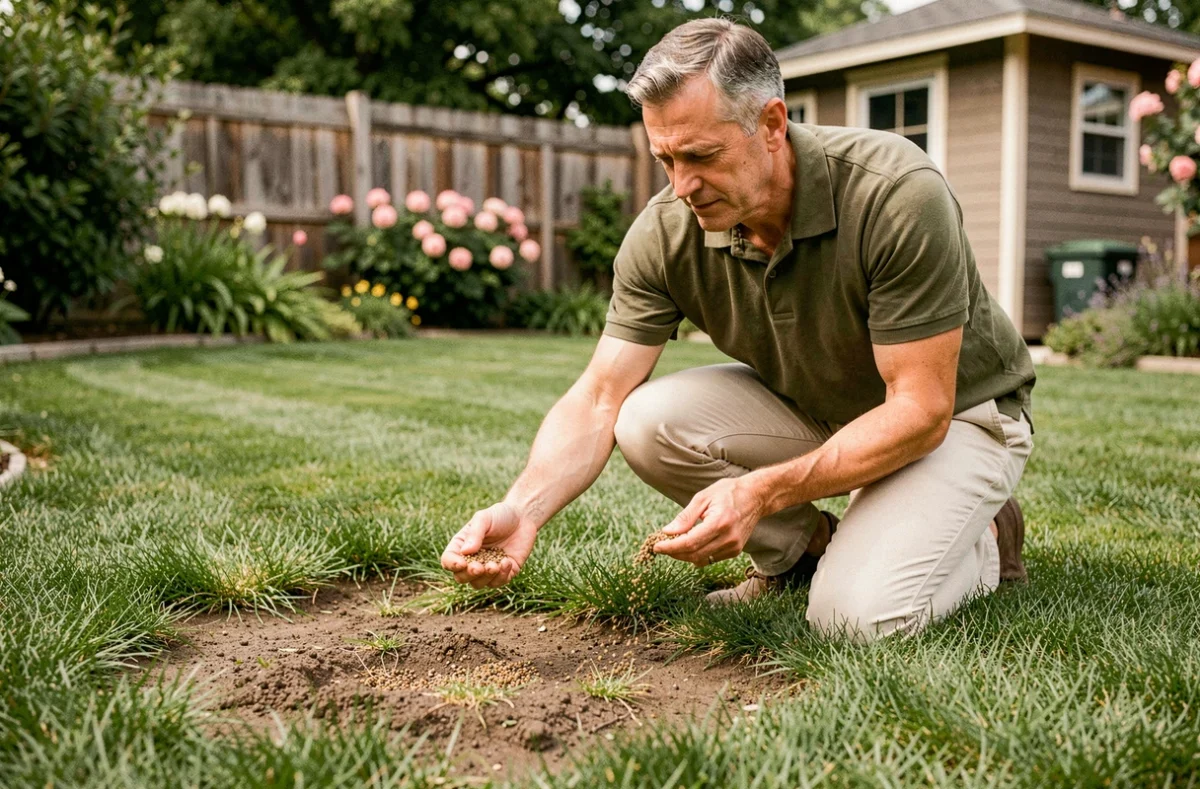
Sowing on poorly prepared soil leads to uneven germination and shallow rooting. Mechanical preparation alone is not enough if the soil’s physical structure has not been corrected.
Soil texture analysis and improvement
Soil that is too clayey holds water at the surface and suffocates roots. Soil that is too sandy lets water and nutrients drain away. The goal is a sandy loam texture with consistent drainage.
- Clay soil: work coarse sand (not fine masonry sand) into the top four inches to break up compaction and improve drainage.
- Sandy soil: add composted organic matter to increase water and nutrient retention.
- Crusting silty soil: add mature compost and lightly rake the surface to limit crust formation after rain, which can prevent germination.
pH: an overlooked factor
Most lawn grasses grow well within a pH range of 6 to 7. Soil that is too acidic limits phosphorus and nitrogen uptake. Soil that is too alkaline locks up iron and causes characteristic yellowing.
A basic pH test (a kit from a garden center or a local laboratory) can help you make adjustments: apply lime to raise an acidic pH, or add sulfur or peat to correct excess alkalinity. This diagnosis prevents you from using fertilizer to compensate for a problem rooted in soil chemistry.
Sowing window and lawn watering restrictions
Lawn seed is traditionally sown in spring or early fall, when the soil is warm enough for germination and natural moisture reduces the need for watering. Fall is still the most favorable time: weed competition is low and rainfall helps the seed establish.
One factor often overlooked: local water-restriction orders may prohibit watering lawns, even newly sown ones. The VigiEau portal lets you check the restrictions in effect in your municipality before scheduling a sowing date. Sowing during a period of water restrictions is a recipe for failed germination.
For the first few weeks, the soil should stay moist at the surface without becoming waterlogged. Short, frequent watering sessions (preferably in the morning) encourage germination. Once the grass is a few inches tall, water less often to encourage deeper rooting.
After germination: mowing, tillering and thickening the lawn
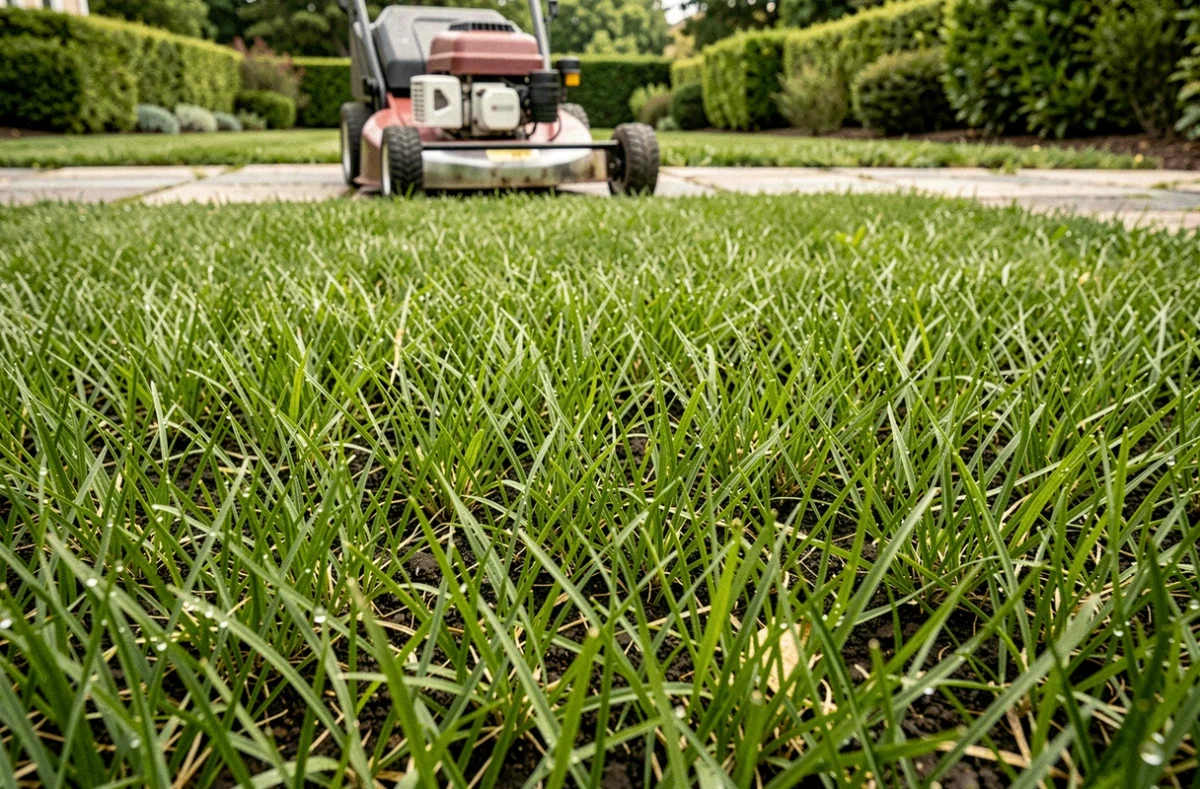
The first mow determines how dense the lawn will become. Mowing too early or too short prevents tillering—the process by which each grass plant produces new side shoots.
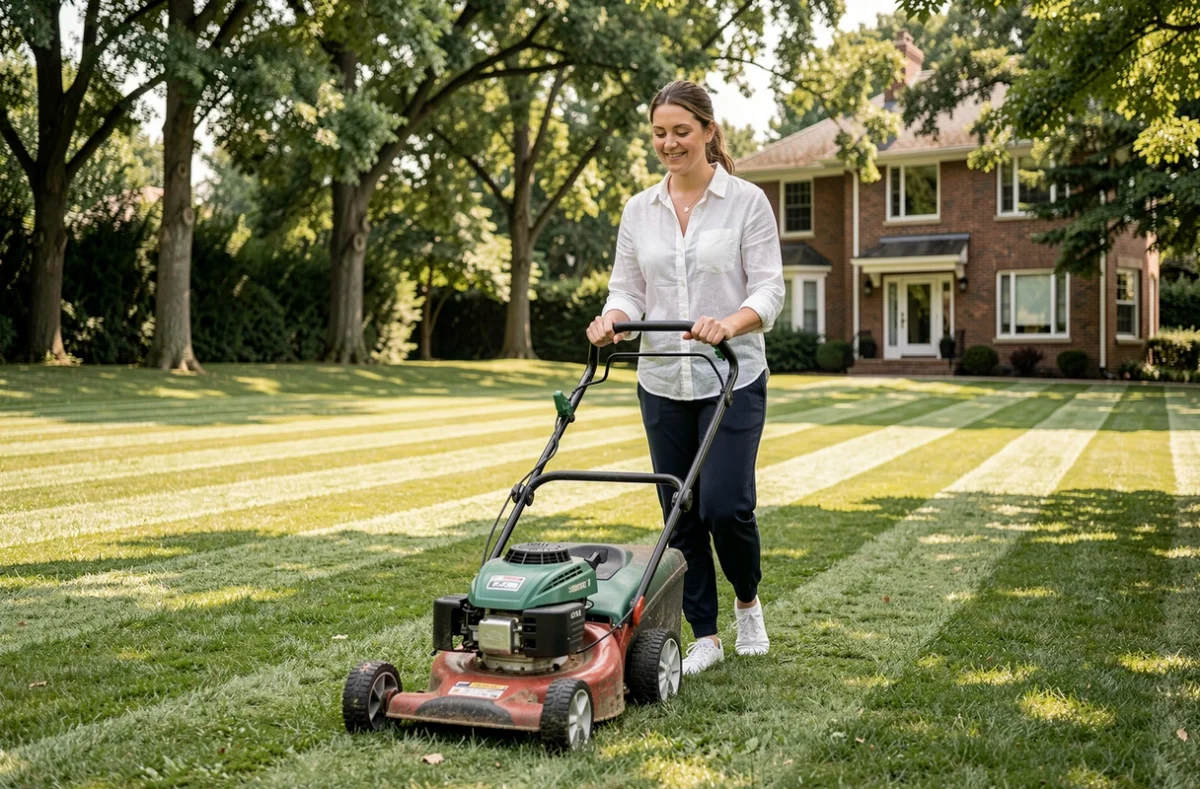
Wait until the grass reaches a suitable height before the first cut, then never remove more than one-third of its height in a single mow. This one-third rule applies every time you mow. Cutting too short exposes the soil, encourages weeds to germinate and stresses the grass.
Lawn scarification and aeration
After the first year, thatch—the buildup of plant debris between the soil and the grass blades—restricts the penetration of water and air. Scarifying in spring or early fall removes this layer and restores the lawn’s vigor.
- Scarify when the soil is slightly moist, never waterlogged, to avoid pulling up the grass plants.
- Aerate compacted areas (high-traffic paths, children’s play areas) with a blade aerator or garden fork.
- Reseed bare patches immediately after scarifying to prevent weeds from colonizing the open space.
Targeted fertilization
A nitrogen fertilizer in spring boosts growth, while a potassium application in late summer helps prepare the lawn for winter. Phosphorus is most important during establishment, when it supports root development. Soil with the right pH absorbs nutrients more effectively, making the initial diagnosis all the more worthwhile.
Avoid fast-release fertilizers in midsummer: they stimulate leaf growth, increasing water demand precisely when water is most limited.
Zone-based lawn care: tailor maintenance to each area
A lawn does not need to be maintained uniformly across its entire area. Zone-based lawn care means dividing it according to use: close mowing and intensive maintenance near the patio, higher mowing and less frequent visits at the back of the garden.
This approach reduces water use, limits inputs and creates habitats for beneficial wildlife. Areas kept at a greater height develop deeper roots and withstand drought better.
Ultimately, growing a successful lawn depends less on how much care you give it than on how appropriate that care is. Testing the soil before sowing, choosing a suitable seed mix and mowing in a way that encourages tillering will produce a dense, long-lasting lawn without the need for constant fixes.