
The term “infant” circulates in health records, pediatric prescriptions, and parenting guides without its exact scope always being understood. The World Health Organization uses this word in a specific context, distinct from that of the dictionary or everyday language. Understanding this definition allows for a better reading of the health recommendations that follow, particularly those related to nutrition and medical follow-up for young children.
Newborn, infant, child: where the WHO draws the lines
The most common confusion contrasts “newborn” and “infant.” The WHO defines the neonatal period as the first 28 days of life. After this threshold, the child enters the category of infant, which generally extends up to 12 months in international health classifications.
This difference between the references is not trivial. It explains why some French medical documents still refer to an “infant” for a child of 18 months, while WHO protocols apply distinct recommendations beyond the first year.
The ANSM, the French medicines agency, uses its own pediatric age classes for treatment dosing. A medication prescribed to an “infant” in the sense of the ANSM does not necessarily cover the same age range as a WHO protocol intended for infants. To delve deeper into the definition of infant on La Family, the intersection of these references sheds light on the nuances between medical usage and common usage.
Why the WHO definition of infant is functional and not just chronological
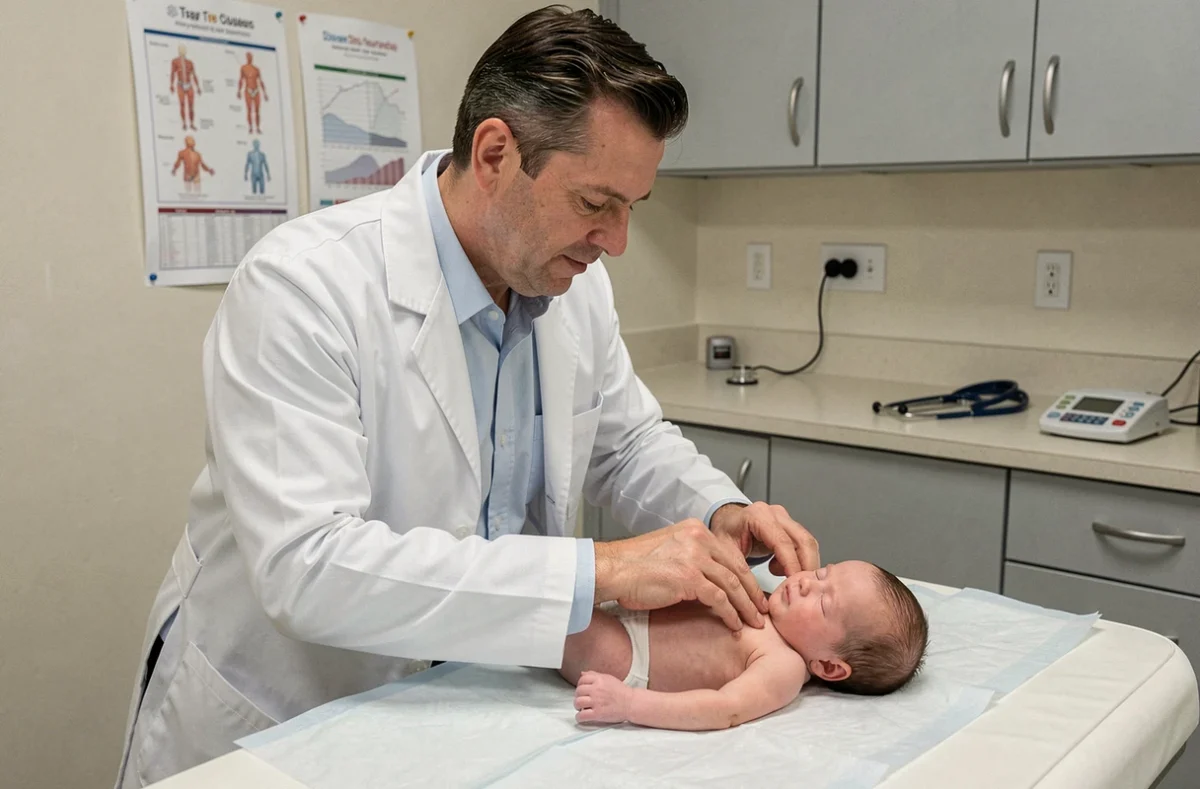
Reducing the notion of infant to a simple age range loses a dimension that the WHO integrates into its recent recommendations. The guidelines published in 2023 on the care of premature infants and low birth weight children illustrate this approach: the clinical condition of the child takes precedence over their chronological age.
A child born before 37 weeks of amenorrhea is premature. They remain an infant once the neonatal period has passed. These two statuses coexist without merging. The WHO notably recommends early use of kangaroo mother care when the clinical condition allows, regardless of the number of days since birth.
This functional approach has a direct consequence on developmental monitoring. Corrected age is necessary to assess a premature infant: health professionals do not compare a child born at 32 weeks with the growth curves of a term-born child of the same civil age. The gap can represent several months of motor or cognitive development, and applying the wrong benchmarks leads to incorrect diagnoses.
Exclusive breastfeeding and complementary feeding: the WHO schedule for infants
The WHO’s dietary recommendations structure the life of the infant into two distinct phases. The first covers the first six months: exclusive breastfeeding is recommended during this period. The WHO and UNICEF advocate that breastfeeding should occur within the hour following birth.
The second phase begins at six months with the introduction of safe, nutritionally appropriate solid complementary foods. Breastfeeding continues in parallel until two years or beyond. This schedule is not arbitrary: it is based on the infant’s nutrient needs, particularly for iron, whose reserves built up during pregnancy are depleted around the sixth month.
WHO data estimates that nearly 400,000 deaths of children under 5 could be avoided each year if exclusive breastfeeding for six months and its continuation until two years were generalized. This figure places infant nutrition at the forefront of global public health priorities, beyond a simple parental choice.
What complementary feeding concretely entails
The term “complementary foods” does not refer to just any food offered to a six-month-old infant. The WHO frames this stage with several criteria:
- Foods must be appropriate in texture and size to limit the risk of choking, with a progression to firmer pieces over the months
- The intake of iron and animal-derived nutrients (meat, fish, eggs) complements breast milk, whose iron content is no longer sufficient to meet needs after six months
- Diverse fruits and vegetables contribute to the diversification of the gut microbiota and the gradual acceptance of new flavors
- The frequency of meals gradually increases: from two to three servings per day between six and eight months, up to three to four servings thereafter
Introducing foods too early before six months, or too late after eight months, is associated with different but documented nutritional risks in WHO publications.

Infant malnutrition: the figures that highlight the global issue
Estimates published by the WHO for 2024 highlight the scale of the problem. Among children under 5 worldwide, 150 million were stunted, 43 million suffered from wasting (insufficient weight for height), and 36 million were overweight.
Half of the deaths of children in this age group are attributable to malnutrition. This finding explains why the WHO systematically links the definition of infant to specific dietary protocols: the word “infant” carries the idea of nourishment, and the accompanying recommendations aim to reduce these figures.
The limitations of available data
These statistics aggregate very different realities depending on the regions. Field feedback varies on the applicability of WHO recommendations in contexts of food crisis, population displacement, or limited access to care. The WHO itself acknowledges the need to adapt its guidelines to exceptionally difficult situations, without lowering the goal of exclusive breastfeeding for six months.
The WHO definition of infant is not just a matter of medical vocabulary. It conditions feeding protocols, developmental monitoring, and malnutrition prevention that concern hundreds of millions of children. Confusing newborn and infant, or ignoring the concept of corrected age in premature infants, can distort the interpretation of growth curves and delay appropriate care.