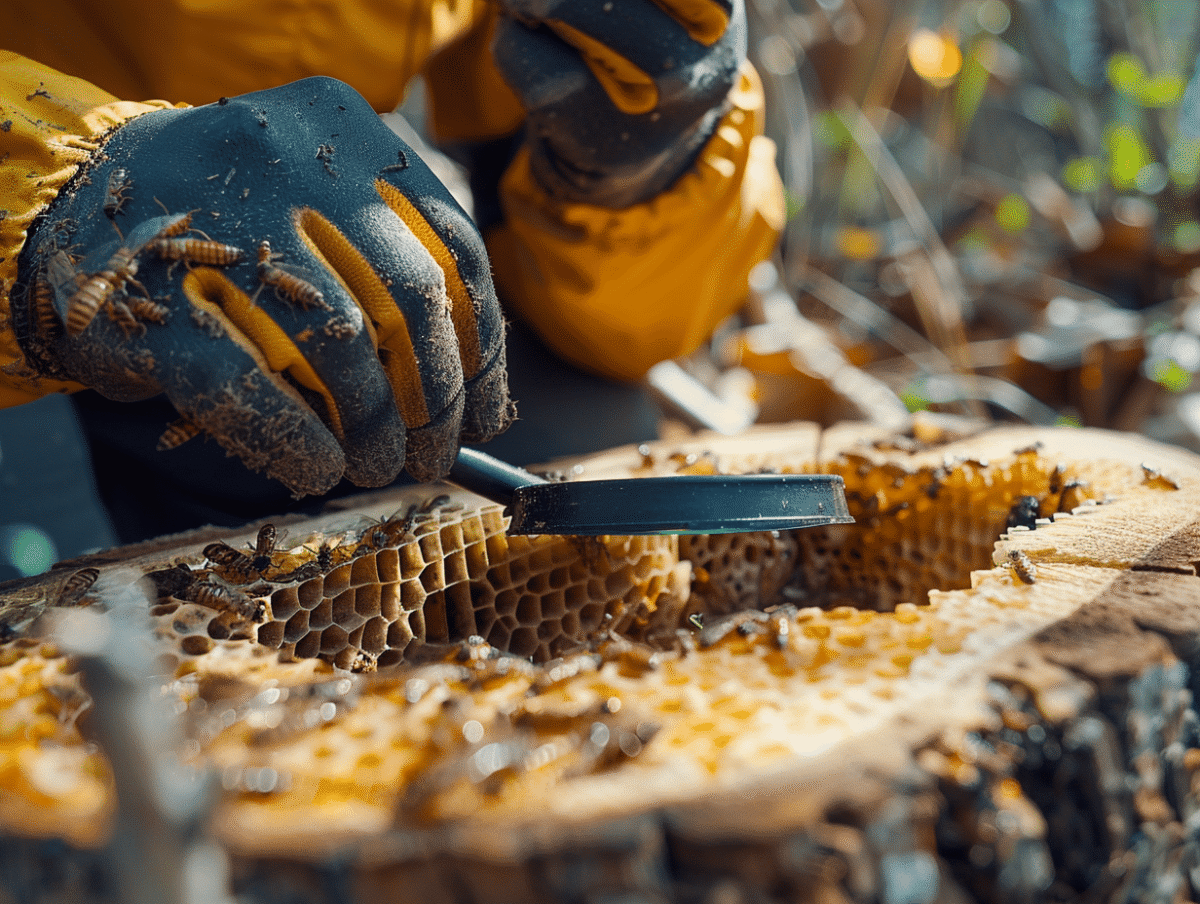
Wood pests pose a serious threat to wooden structures and objects, whether they are inside or outside our homes. From the hidden termite that silently attacks foundations to the house borer that burrows galleries in frameworks, these pests can cause considerable damage. Identifying these intruders is the first fundamental step before engaging in effective control. Telltale signs such as wood dust, holes in structures, or gnawing noises are all clues to watch for to detect their presence.
Identification and characteristics of wood pests
At the heart of our homes, various wood-boring insects work silently, threatening the integrity of our wooden constructions. Among them, the wood borer, an insidious entity, carves its destructive trail. Wood-boring, this borer attacks the wooden structures of buildings, causing sometimes irreversible damage. Knowing these pests means recognizing the danger they represent to our built heritage.
The small borer, scientifically named Anobium punctatum, measures between 2.7 and 4.5 mm and particularly enjoys softwood. The large borer, Xestobium rufovillosum, is distinguished by its larger size, ranging from 6 to 8 mm, and its preference for old and damp wood. These dietary preferences shape the control strategies to adopt to protect our homes.
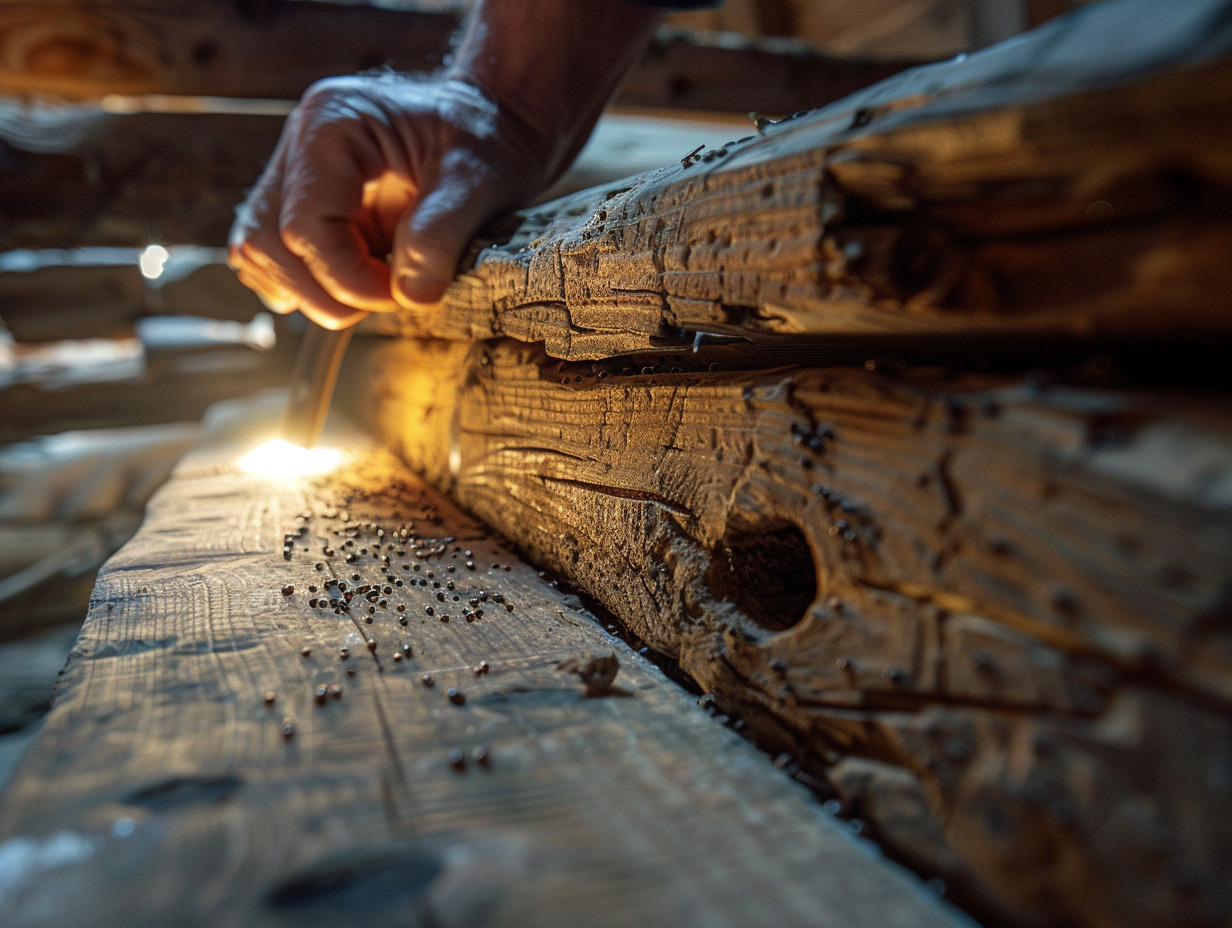
The larvae of these borers, true artisans of disaster, feed on wood, leaving behind powdery frass, a discreet testament to their voracity. The female borer, for its part, lays an average of 40 eggs, ensuring the perpetuation of this lineage of pests. This sustained reproduction poses a challenge for property owners.
These pests, although originally from forest environments, find favorable conditions for their development in our habitats. The family of Anobidae, to which the wood borer belongs, is known for its destructive habits. A precise understanding of these insects and their life cycles is essential to implement appropriate control measures. However, other species, such as carpenter wasps, although less common, should not be overlooked in assessing risks to wooden structures.
Control strategies and prevention against wood pests
In the face of the relentless threat of wood pests, implementing curative and preventive treatments is necessary. These treatments often include the chemical spraying of biocidal substances, effective for impregnating wood and eradicating existing insects. At the same time, the application of linseed oil by injection constitutes a preventive method aimed at protecting wood against future borer attacks. However, these chemical methods must be handled with care, taking into account the manufacturers’ recommendations and current environmental standards.
Thermal treatment presents itself as a residue-free alternative, using heat to exterminate pests. This technique, while effective for eliminating wood borers, requires specific equipment and expertise to ensure maximum impact while preserving the integrity of the treated wood.
The introduction of nematodes, natural predators, offers a biological solution in the fight against borer larvae. These microorganisms, once introduced into the larvae’s habitat, attack and kill them, thereby reducing the borer population without the use of chemicals. The effectiveness of this method depends on the precision of its application and compatibility with the concerned environment.
Prevention remains key in preserving wood against pest invasion. Ensure adequate ventilation of spaces, maintain controlled humidity, and regularly inspect wood for any signs of frass or perforations. These simple yet rigorous actions form the first line of defense against potential damage caused by the unwanted guests of our wooden structures.